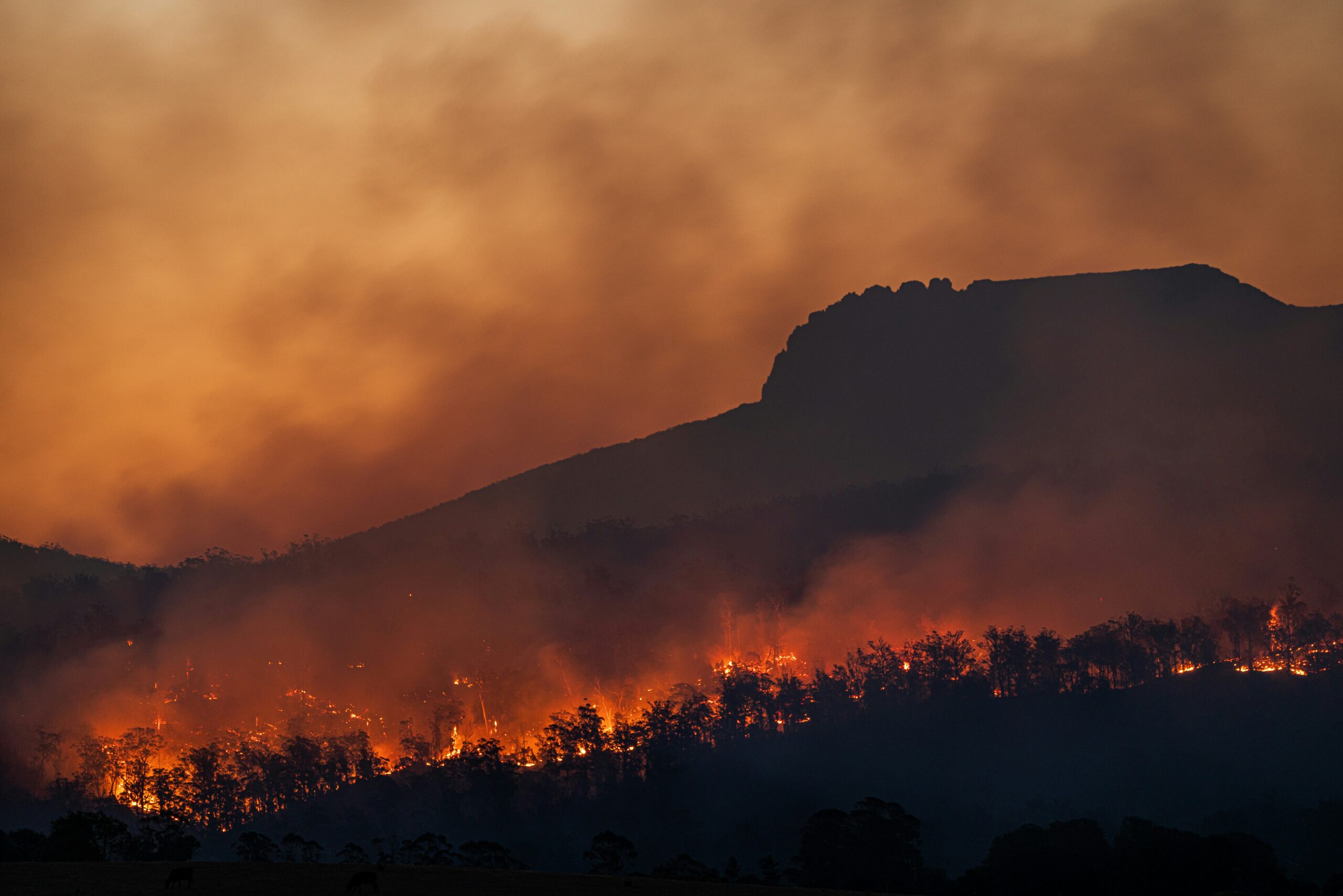
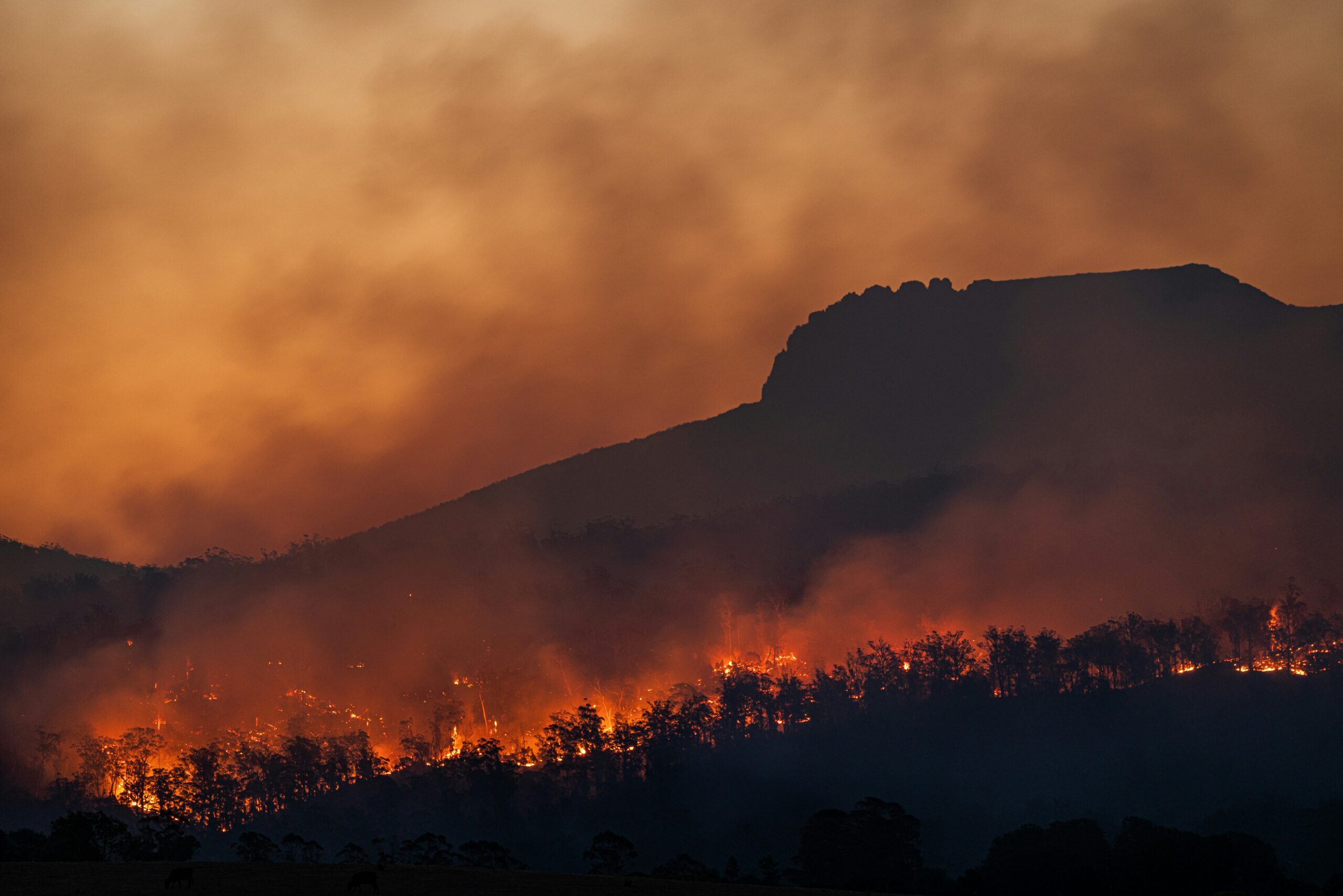
Global Warming, Longer Dry Seasons, and the Growing Wildfire Threat in California and Europe.
Over the past 10 to 20 years, communities in California, Spain, France, and throughout the Mediterranean have witnessed significant changes in the rhythm of the seasons. Periods of extreme heat are becoming more persistent, drought can last longer, rainfall is increasingly variable, and vegetation can remain dangerously dry for extended periods.
The traditional idea of a predictable “fire season” is also changing. In many regions, conditions favorable to wildfire can develop earlier and continue later in the year.
These changes cannot be attributed simply to a few unusually hot summers. They are occurring against the background of a much larger transformation: **the warming of the Earth’s climate caused primarily by human emissions of greenhouse gases.**¹
What Is Causing Our Planet to Warm?
Earth’s climate has always changed naturally. Volcanic activity, changes in solar energy, ocean circulation, and other natural processes have influenced climate throughout the planet’s history.
What distinguishes the warming occurring today is its primary cause and rapid pace.
Since the Industrial Revolution, humans have burned enormous quantities of coal, oil, and natural gas to generate electricity, operate automobiles, trucks, ships and aircraft, manufacture products, heat and cool buildings, and support modern industrial economies.
Burning these fossil fuels releases carbon dioxide into the atmosphere. Carbon dioxide, methane, nitrous oxide, and other greenhouse gases trap heat that would otherwise escape into space. As their atmospheric concentrations increase, additional heat is retained within Earth’s climate system.
The Intergovernmental Panel on Climate Change (IPCC) has concluded that human activities—principally through emissions of greenhouse gases—have unequivocally caused global warming.¹
The IPCC was established in 1988 by the United Nations Environment Programme (UNEP) and the World Meteorological Organization (WMO). It does not conduct most climate experiments itself. Instead, scientists from around the world assess and synthesize the enormous body of published scientific research on climate change. Its assessment reports are among the world’s most authoritative scientific evaluations of climate change, its causes, risks, and possible responses.
Fossil fuels are not the only source of greenhouse-gas emissions. Other contributors include:
● Deforestation and changes in land use;
● Agriculture and livestock production;
● Cement and industrial manufacturing;
● Methane released from energy production, agriculture, and waste;
● Nitrous oxide associated particularly with agriculture and fertilizers; and
● Certain industrial gases used in manufacturing and refrigeration.
Forests are particularly important because trees remove carbon dioxide from the atmosphere as they grow. When forests are cleared or burned, stored carbon can be released while the landscape simultaneously loses some of its ability to absorb future carbon dioxide.
California: When a Spark Meets a Hotter and Drier Landscape
Wildfire is not new to California.
Fire has always been part of many California ecosystems, and fires can begin naturally through lightning or through human activity—including electrical equipment, vehicles, machinery, unattended fires, and arson.
It would therefore be scientifically inaccurate to say that global warming directly causes every wildfire.
The more important relationship is this:
Human-caused climate change can create hotter and drier environmental conditions that increase wildfire risk, lengthen periods of dangerous fire weather, dry vegetation more rapidly, and make some fires more difficult to control once an ignition occurs.
The United States Environmental Protection Agency (EPA) reports that climate change can increase wildfire frequency, extent, and severity through higher temperatures and drought. Earlier snowmelt and reduced snowpack can also reduce water availability during hot summer conditions.²
This distinction is important.
Climate change may not provide the spark that starts a particular fire, but it can influence the conditions into which that spark falls.
Imagine two landscapes.
One has recently received adequate precipitation. Its soil retains moisture, vegetation contains more water, and temperatures are moderate.
The other has endured prolonged heat and inadequate rainfall. Grasses are brittle, shrubs are dry, trees are stressed, and the atmosphere itself is extremely dry.
The same ignition can produce very different consequences.
Climate change therefore acts as a risk multiplier, interacting with drought, vegetation conditions, forest management, development patterns, wind, and sources of ignition.
Spain, France, and a Warming Europe
The changes occurring in California have important parallels across the Atlantic.
Spain, southern France, Portugal, Italy, Greece, and other Mediterranean regions have always experienced hot and relatively dry summers. But these areas are now confronting the additional pressures of a warming climate.
According to the Copernicus Climate Change Service (C3S), Europe is currently the world’s fastest-warming continent. Over approximately the past 30 years, European temperatures have risen at more than twice the global average rate.³
Copernicus is part of the European Union’s Earth-observation program. The Copernicus Climate Change Service is implemented by the European Centre for Medium-Range Weather Forecasts (ECMWF) on behalf of the European Commission. It combines observations, satellite information, historical climate records, and sophisticated climate-analysis systems to monitor changes occurring across Europe and the planet.
Its findings show that Europe is not simply experiencing isolated episodes of unusual weather. There is a measurable long-term warming trend.
This warming has profound implications for southern Europe.
What the European Environment Agency Is Warning About
The European Environment Agency (EEA) is an agency of the European Union that provides independent scientific information and environmental assessments to policymakers and the public. Established by European Union legislation in 1990 and based in Copenhagen, the agency monitors issues including climate change, drought, water resources, biodiversity, pollution, environmental health, and wildfire risk.
The EEA reports that Europe is facing stronger climate hazards, including heatwaves and prolonged droughts. It also identifies **southern Europe as particularly vulnerable to wildfires, heat, and water scarcity.**⁴
The agency further reports that climate change has increased forest-fire risk across Europe and that longer fire seasons and expansion of fire-prone areas are projected across much of the continent.⁵
There is an important qualification, however: climate change does not mean that every European country experiences more acres burned every year. Fire prevention, firefighting, land management, weather variability, and human behavior also affect annual wildfire totals. Indeed, the EEA notes that despite increased climate-related fire risk, the Mediterranean’s total burned area has shown a slight long-term decrease since 1980, demonstrating the importance and effectiveness of fire-control efforts.⁵
That distinction makes the climate argument stronger, not weaker. Climate determines risk; human preparation can still influence the outcome.
Spain and France: The Changing Mediterranean Climate
Spain and southern France are particularly important because they lie within or adjacent to the Mediterranean climate zone.
Mediterranean ecosystems evolved around seasonal cycles of wet and dry weather. But as temperatures increase, evaporation also increases. Moisture can be removed more rapidly from soil and vegetation, placing forests, grasslands, farms, reservoirs, and water supplies under additional stress.
The IPCC projects increasing fire-weather conditions in Mediterranean Europe as warming continues.⁶
This means that a landscape does not necessarily have to receive dramatically less annual rainfall to become more susceptible to drought and fire. Higher temperatures themselves can increase evaporation and dry the landscape.
That is one of the most important concepts for understanding today’s climate.
Less Rain—or Rain at the Wrong Time?
Climate change should not be described simply as “less rain everywhere.”
The reality is more complicated.
A warming atmosphere changes the global water cycle. Some locations may receive less precipitation, while others may receive more. Seasonal rainfall can shift, and prolonged dry periods can sometimes be interrupted by exceptionally intense storms.
Europe is already experiencing changes in precipitation patterns, including increases in the intensity of some extreme rainfall events.⁷
Therefore, a region can experience drought and flooding within the same year.
Months of inadequate rainfall can harden soil and dry vegetation. Then an intense storm may release enormous amounts of water over a short period.
Instead of slowly replenishing groundwater, some of that water may rush across the surface, producing erosion and flooding.
After severe wildfires, the danger can become even greater because burned landscapes may have less vegetation available to slow runoff and stabilize soil.
This is one of the paradoxes of climate change: a community can suffer from too little water and, months later, be devastated by too much water arriving too quickly.
The Seasons Are Losing Their Familiar Boundaries
Perhaps one of the most noticeable changes for ordinary people is not a scientific measurement but something they experience personally:
The seasons do not always seem to behave as predictably as they once did.
Climate scientists have documented changes in seasonal processes, including longer periods of extreme heat, earlier snowmelt, shifting growing seasons, and changes in wildfire conditions.⁸
A dry season that extends several additional weeks can have enormous consequences.
Each additional hot, dry week removes moisture from grasses, shrubs, forests, and soil.
For farmers, that can mean greater irrigation demands.
For cities, it can mean greater pressure on reservoirs.
For forests, it can mean stressed trees and increasingly dry vegetation.
And for firefighters, it can mean additional weeks during which communities remain vulnerable.
The Cost Extends Far Beyond the Flames
The consequences of major wildfires cannot be measured simply by counting burned acres.
There are homes and businesses destroyed, families displaced, firefighters placed in danger, wildlife habitat lost, watersheds damaged, and communities forced to rebuild.
Smoke can travel hundreds or even thousands of miles, affecting people who live nowhere near the actual fire.
Severe fires can damage soil, increase erosion, threaten drinking-water sources, destroy wildlife habitat, and release carbon stored in vegetation back into the atmosphere.
The economic consequences can continue for years through rebuilding costs, insurance losses, infrastructure repairs, agricultural damage, tourism losses, and increased public spending on emergency response.
What Can Be Done?
Climate change and wildfire require two strategies simultaneously: mitigation and adaptation.
Mitigation means addressing the underlying causes of climate change by reducing greenhouse-gas emissions. That includes transitioning toward lower-carbon energy, improving energy efficiency, reducing methane emissions, protecting forests, developing cleaner transportation, and advancing technologies that allow economies to prosper with fewer emissions.
Adaptation means recognizing that some climate change has already occurred and preparing communities for the conditions they now face.
That includes responsible forest and vegetation management, prescribed burning where scientifically and locally appropriate, improved electrical infrastructure, defensible space around buildings, stronger building standards, improved evacuation planning, water conservation, better reservoir and watershed management, and careful decisions about development in areas with extreme wildfire exposure.
Neither strategy can replace the other.
Reducing emissions without preparing communities for today’s risks would be inadequate.
Preparing for fires without addressing continued warming would mean confronting progressively more difficult climate conditions.
We must do both.
A Warning Across Two Continents
California, Spain, and France are separated by thousands of miles and an ocean. Their landscapes, governments, cultures, and ecosystems are different.
Yet they increasingly share a common challenge.
A warmer atmosphere does not recognize national borders.
The carbon dioxide released in California does not remain over California. Emissions produced in Europe do not remain over Europe. Greenhouse gases mix throughout the atmosphere, making climate change fundamentally a global problem.
What happens in California should therefore matter to someone living in Spain.
What happens in Spain or France should matter to someone living in California.
The fires themselves may be local.
The conditions contributing to their growing danger are global.
Our planet is giving us measurable warnings through rising temperatures, prolonged drought, changing precipitation, extreme heat, stressed ecosystems, melting snow and ice, and increasingly dangerous fire weather.
We should listen to those warnings.
The challenge before us is not simply to stop the next wildfire. No society can eliminate wildfire entirely, nor should every natural fire necessarily be eliminated.
The greater challenge is to build communities capable of living safely in a changing climate while addressing the human activities that are accelerating that change.
The choices made during the next generation—about energy, forests, transportation, agriculture, water, development, and conservation—will help determine what kind of climate the generation after us inherits.
The planet is changing. The question now is how quickly we are willing to change with it.
Sources and Endnotes
1. Intergovernmental Panel on Climate Change (IPCC). Climate Change 2023: Synthesis Report—Contribution of Working Groups I, II and III to the Sixth Assessment Report of the Intergovernmental Panel on Climate Change. IPCC, Geneva, Switzerland, 2023. The report concludes that human activities, principally greenhouse-gas emissions, have unequivocally caused global warming.
2. U.S. Environmental Protection Agency (EPA). Climate Change Indicators in the United States: Wildfires. EPA. The indicator describes relationships among rising temperatures, drought, snowmelt, water availability, and wildfire risk.
3. Copernicus Climate Change Service (C3S) / European Centre for Medium-Range Weather Forecasts (ECMWF). European State of the Climate 2025. Copernicus reports that Europe is the fastest-warming continent and has recently been warming at more than twice the global average rate.
4. European Environment Agency (EEA). Climate Change Impacts, Risks and Adaptation in Europe. EEA, Copenhagen. The agency identifies southern Europe as particularly vulnerable to wildfire, heat, drought, and water scarcity.
5. European Environment Agency (EEA). Forest Fires in Europe. EEA Indicators. The assessment reports increased climate-related forest-fire risk and projects longer fire seasons and expansion of fire-prone areas in many European regions.
6. Intergovernmental Panel on Climate Change (IPCC). Sixth Assessment Report, Working Group I, Chapter 12: Climate Change Information for Regional Impact and for Risk Assessment. The assessment projects increased fire-weather conditions in Mediterranean Europe under continued warming.
7. Copernicus Climate Change Service (C3S) and World Meteorological Organization (WMO). European State of the Climate. Reports document warming, drought, heat extremes, and changes in European precipitation, including increases in the intensity of extreme precipitation events.
8. U.S. Environmental Protection Agency (EPA). Seasonality and Climate Change: A Review of Observed Evidence in the United States. EPA, 2021. The assessment documents changes including longer and more frequent summer heat waves, earlier snowmelt, and changes in the timing and duration of wildfire and other seasonal processes.
Principal Scientific Organizations
IPCC — Intergovernmental Panel on Climate Change: Established by the United Nations Environment Programme and World Meteorological Organization to assess scientific knowledge concerning climate change.
EEA — European Environment Agency: An agency of the European Union providing independent environmental information and assessments to policymakers and the public.
C3S — Copernicus Climate Change Service: Part of the European Union’s Copernicus Earth-observation program and implemented by ECMWF on behalf of the European Commission.
EPA — United States Environmental Protection Agency: The U.S. federal agency responsible for protecting human health and the environment and for maintaining national climate-change indicators and environmental data.